
In today’s data-driven business world, companies use analytics to guide decisions. Predictive analytics forecasts future outcomes using historical and real-time data. Prescriptive analytics recommends actions to optimize results. Predictive analytics answers what might happen; prescriptive addresses what should be done next.
Understanding the distinction between predictive and prescriptive analytics is crucial for organizations to gain a competitive edge, enhance operational efficiency, and unlock new business opportunities. This blog provides a detailed comparison, defining each approach, highlighting their differences, illustrating use cases, describing benefits, and outlining best practices for effective implementation.
Industry Insight: Why Predictive & Prescriptive Analytics Matter in 2025
At Codeflix, we’ve been diving into analytics lately, and we’ve noticed a significant change: businesses are moving beyond just predicting trends—they’re looking for actionable insights backed by solid data. Indian SMBs, particularly in areas like retail, manufacturing, and fintech, are increasingly turning to predictive and prescriptive models to tackle challenges like rising competition, shifting consumer habits, and operational hiccups. This shift highlights that analytics has evolved from being merely a support tool to becoming a vital part of business strategy.
What is predictive Analytics?
Predictive analytics uses past data to estimate what might happen in the future. By spotting patterns and trends in existing information, these models estimate the likelihood of outcomes. For instance, a retail company might look at past sales, customer behavior, and seasonal trends to project revenue for the next quarter.
At its heart, predictive analytics relies on statistical models and machine learning algorithms that analyze large amounts of data to estimate probabilities. While these models can’t guarantee an exact outcome, they provide likelihoods—such as stating, “there’s a 70% chance that sales will go up next month.”
Machine learning is very important in this field because it permits automated pattern recognition and predictive modeling. These algorithms understand using historical data and fine-tune themself over time as new data becomes available, offering businesses insights that are accurate and better compared to what a human analyst could offer.
It’s necessary to remember that predictive analytics supports decision-making without directly informing businesses what action they need to take. It gives forecasts that organizations can utilize to make smart choices, but the final decision is always up to the business itself. In this way, predictive analytics acts in a more sophisticated way rather than a strict set of instructions.
What is Prescriptive Analytics?
Predictive analytics is all about predicting what might happen in the future, while prescriptive analytics takes one step further by suggesting particular actions to help reach the possible outcomes. By finding out the possible decisions and their likely outcomes, prescriptive analytics guides organizations in selecting the most effective route to take.
For Example, if a company expects slow revenue through predictive analytics, it might change to prescriptive analytics to find out which new product launches or marketing strategies could spark growth. prescriptive models simulate various situations, considering factors such as cost, risk and potential return on investment to pinpoint the best plan of action.
Prescriptive analytics is more complex than predictive analytics because it not only looks at the likelihood of events but also gives importance to the consequences of different choices. It usually combines both structured and unstructured data, such as customer opinion, images, or operational metrics, to provide actionable insights.
In the world of prescriptive analytics, machine learning and optimization algorithms play an important role. These tools continuously improve recommendations as new data comes in, permitting organizations to adapt swiftly to changing situations. From managing risks to optimizing business processes, predictive analytics fills decision makers with actionable intelligence tailored to their company goals.
Predictive vs. Prescriptive Analytics: Key Differences
Both Predictive and prescriptive analytics are often termed as two sides of the same coin; finding out their differences is crucial for making the most of them.
Purpose: Predictive analytics is all about finding future outcomes with the help of historical data, whereas prescriptive analytics takes a step further by suggesting actions to achieve the best possible outcomes.
Data Type: predictive analytics primarily depend on structured data, like transactions or customer histories, while prescriptive analytics combines both structured and unstructured data which includes text, images, and multimedia.
Output: Predictive analytics offers you probabilities and potential scenarios, but prescriptive analytics hands you specific, actionable recommendations.
Model Behavior: Predictive models will offer the same results when fed the same datasets, but prescriptive models adapt and update their recommendations as new data comes in.
Complexity: Predictive analytics hone in on trends and likelihoods, while prescriptive analytics dives into simulation, scenario analysis, and multi-variable optimization.
Goal: Predictive analytics supports informed decision-making by illustrating “what might happen,” while prescriptive analytics guides you in the right direction by answering “what should we do about it.
In real-world applications, predictive analytics sheds light on possible outcomes, while prescriptive analytics provides the roadmap for taking action based on those insights. Together, they work to provide better strategic decision-making.
Both predictive and prescriptive analytics play a vital role in modern data strategy. While predictive analytics forecasts what might happen next, prescriptive analytics recommends the best course of action based on those predictions. Together, they empower businesses to move from insight to intelligent action — turning data into measurable results.
Use Cases Highlighting the Power of Predictive and Prescriptive Analytics
Predictive and prescriptive analytics hold incredible potential to change various industries. Here are some key instances that showcase their value:
Predictive Analytics Use Cases
Financial Forecasting: By diving into past financial data, market trends, and credit patterns, companies can predict revenue streams, investment returns, and potential capital needs.
Customer Churn Prediction: Analyzing customer interaction, purchase details, and support interactions supports businesses spot those who might be on the verge of leaving, allowing them to take precautionary steps to retain these customers.
Healthcare Utilization: By looking at patient data and risk factors, healthcare providers can predict medical events, readmission rates, and treatment effectiveness, leading to better resource allocation and improved patient care.
Prescriptive Analytics Use Cases
Supplier Selection: Algorithms assess various factors like cost, quality, lead times, and logistics constraints to suggest the best suppliers, ensuring a smooth supply chain process.
Personalized Pricing: Companies can develop customized pricing strategies by analyzing data on customers’ willingness to pay, striking a balance between profitability and customer satisfaction.
Portfolio Optimization: Financial institutions can enhance their investment portfolios by considering risk, return correlations, and client goals, crafting strategies that align with both growth and stability.
These examples illustrate how predictive analytics can forecast trends and risks, while prescriptive analytics takes those insights and turns them into actionable strategies that lead to real business results.
Both of these analytical approaches can really enhance how organizations make decisions, but they each bring something special to the table.
Real-World Scenario: How Both Analytics Work Together
Imagine a retail chain that’s bracing for a dip in foot traffic next quarter.
Using predictive analytics, they spot a potential 30% decrease in weekday visits, thanks to seasonal trends and customer behavior.
Then, prescriptive analytics steps in to weigh different strategies—like discounts, product bundles, and loyalty rewards—and suggests the best mix to help bounce back from the anticipated slump.
This holistic approach not only helps businesses grasp future challenges but also equips them with clear strategies to tackle those challenges head-on.
Benefits of Predictive Analytics
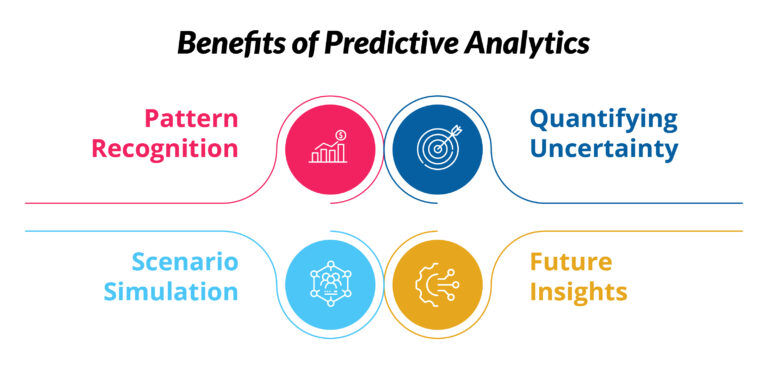
Pattern Recognition: This helps uncover hidden patterns in vast datasets, allowing organizations to identify trends that might not be obvious through human analysis.
Quantifying Uncertainty: It offers confidence intervals and probabilistic forecasts, which are essential for managing risks effectively.
Scenario Simulation: This feature lets organizations test out various hypothetical situations without breaking the bank, encouraging agile experimentation.
Future Insights: Predictive analytics provides a glimpse into upcoming trends and potential disruptions, which supports proactive decision-making.
Benefits of Prescriptive Analytics
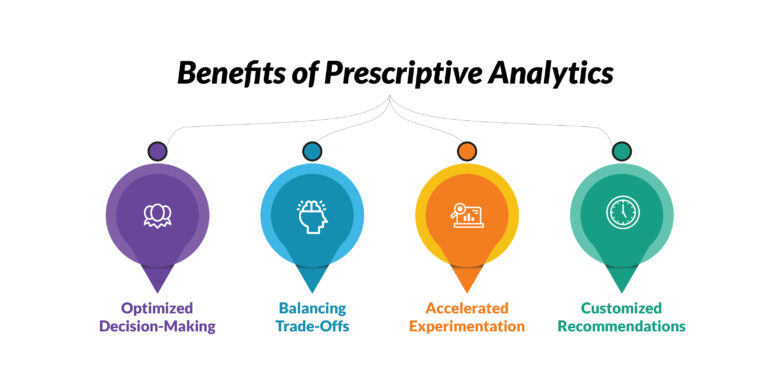
Optimized Decision-Making: It employs algorithms to pinpoint the best possible actions given certain constraints.
Balancing Trade-Offs: This approach dynamically reconciles competing priorities, like cost versus quality or speed versus accuracy.
Accelerated Experimentation: It allows for the simulation of multiple strategies at once, helping to quickly identify the most effective path.
Customized Recommendations: Prescriptive analytics delivers tailored guidance that aligns with the specific goals and strategies of the organization.
By merging predictive insights with prescriptive recommendations, organizations can boost their analytical maturity, enhance operational efficiency, and secure a lasting competitive edge.
Expert Perspective: Where Businesses Go Wrong
From our experience with analytics-focused companies, we’ve found that the real hurdles often stem not from the technology itself, but from how it’s executed. Many organizations pour resources into top-tier tools, yet they struggle with a lack of a clear plan, messy data, and insufficient collaboration between departments. Predictive and prescriptive models don’t fail due to their complexity; rather, it’s because teams often miss the mark in aligning their business objectives with the insights derived from data. A winning analytics strategy always combines cutting-edge technology with deep industry knowledge and disciplined data management practices.
Best Practices for Implementation Success
Successfully rolling out predictive and prescriptive analytics takes thoughtful planning and seamless integration of people, processes, and technology:
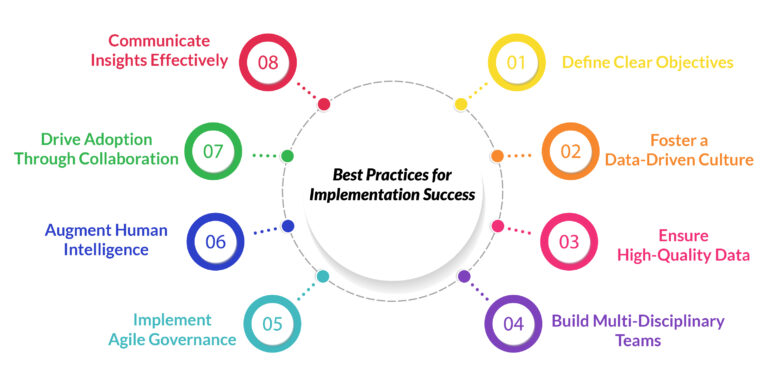
Define Clear Objectives: Set measurable business goals, like boosting revenue, improving operational efficiency, or enhancing customer retention, to steer your analytics efforts.
Foster a Data-Driven Culture: Promote a mindset of experimentation, data-informed decision-making, and a willingness to learn from iterations throughout the organization.
Ensure High-Quality Data: Trustworthy predictions and recommendations hinge on having accurate, consistent, and secure data pipelines and storage systems.
Build Multi-Disciplinary Teams: Bring together expertise from business domains, data engineering, and analytical skills to maximize the effectiveness of your solutions.
Implement Agile Governance: Strike a balance between innovation and necessary controls, including ethical oversight, model transparency, and bias detection.
Augment Human Intelligence: Use analytics to enhance decision-making rather than fully automate it, ensuring that critical human judgment remains intact.
Drive Adoption Through Collaboration: Involve business units at every stage of the analytics process to guarantee relevance, ownership, and practical application.
Communicate Insights Effectively: Utilize data storytelling, visualizations, and interactive dashboards to turn complex analyses into clear, actionable insights.
By following these practices, you can boost adoption, enhance ROI, and ensure that predictive and prescriptive analytics provide real business value.
Conclusion:
Predictive and Prescriptive Analytics are like the twin pillars of today’s business intelligence landscape. Predictive analytics gives us a glimpse into the future by forecasting trends and possible outcomes, while prescriptive analytics takes those insights and turns them into practical recommendations. When these two work hand in hand, they empower organizations to foresee challenges, make informed decisions, and stay ahead in fast-paced and ever-changing markets.
But making this work isn’t just about crunching numbers. It’s about building a culture that values data, investing in solid data infrastructure, bringing together talented teams from different areas, and ensuring flexible governance. By merging strategic foresight with actionable insights, businesses can tap into the full power of predictive and prescriptive analytics, leading to smarter choices and sustainable growth in a world that’s increasingly driven by data.